
 US Dollar
Frequently Asked Questions About Mezzanines
Posted by Audrey Hood on Mar 22nd 2026
General Questions
What is a mezzanine in a warehouse or industrial facility?
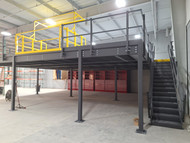
Mezzanines are intermediate levels built between the main floor and ceiling of a facility. These storage platforms create additional floor space without increasing the building’s footprint. Mezzanines are often made out of steel and designed to support heavy loads.
What are the most common uses for mezzanines in industrial and automotive spaces?
Mezzanines offer a range of functions. Some of these common uses include:
- Additional storage space
- Work space or production areas
- Office space
- Equipment platforms
- Parts rooms
These storage structures take advantage of vertical space, building up instead of out.
How do mezzanine floors differ from traditional second floors?
A mezzanine floor differs from traditional second floors in several ways. Mezzanines are considered semi-permanent structures while traditional second floors are permanent. This means that mezzanines can often be reconfigured and moved around. Mezzanines also rely on their own columns and beams rather than the building’s structure.
Building codes are often different for mezzanines than full floors, which affects fire protection, egress, and occupancy requirements.
Are mezzanines considered permanent structures?
Mezzanines are not considered permanent structures; they are considered semi-permanent structures. These storage platforms are durable and can hold heavy loads but are not a part of the building’s permanent structure.
With mezzanines being semi-permanent, they can be reconfigured over time and offer flexibility with changes.
.JPG)
Design
What factors determine the load capacity of a mezzanine?
The load capacity of a mezzanine is determined by several factors. This includes:
- Use of the mezzanine: load capacity relies on what this mezzanine will be used for, whether that is inventory storage, office space, or equipment.
- Decking material: mezzanines will often use bar grating, resin decking, or steel plates, which have different weight-bearing capabilities.
- Point loads vs. uniform loads: determine if items will be spaced out evenly across the floor or concentrated in one area, as this affects load capacity.
How do I know which type of mezzanine design is right for my building?
Choosing the right type of mezzanine design for your building depends on aspects such as your current layout, operations, and future growth. One must think about clear height to determine how much available space there is and should factor in current workflow to ensure that a mezzanine will support operations.
Once you know what you want to use your mezzanine for, and take these factors into account, you can determine which type of mezzanine is right for your facility.
What types of mezzanines are there?
There are three main types of mezzanines: free-standing mezzanine, full-mat mezzanine, and catwalk style mezzanine.
A free-standing mezzanine allows for larger spans between columns, giving you the greatest flexibility. A full-mat mezzanine is racking or shelving supported, where decking goes over the top of the racking or shelving and the top level is independent of the below storage layout. Catwalk style mezzanine is where the shelving below has to match the shelving above, and only the aisles are decked.
What are the space requirements for adding a mezzanine?
Space requirements for adding a mezzanine are dependent on your clear height in your building and the amount of space needed for column placement.
Can mezzanines be customized for specific workflows or equipment?
Yes, mezzanines are highly customizable and should be tailored to meet your workflows and equipment needs. Some common customizations can include stairs, decking materials, lighting, and integrated conveyors.
What codes and safety regulations apply to mezzanine construction?
There are certain OSHA standards that apply to mezzanine construction as these regulate guardrails, stairs, and fall protection.
.JPEG)
Installation and Construction
How long does it take to install a mezzanine in a warehouse?
The installation time for a mezzanine depends on the type of mezzanine and size of the project. Installation is typically quick for smaller, less complex mezzanines, taking anywhere from 2-5 days, and more complex projects taking 2-4 weeks.
The installation of a mezzanine typically keeps warehouse disruption to a minimum, preventing operations from coming to a halt.
Do mezzanines require building permits?
Yes, mezzanines require building permits as these must comply with safety and building codes. These storage platforms must adhere to OSHA requirements and the International Building Code.
What disruptions should I expect during mezzanine installation?
Disruptions for mezzanine installation are typically minimal. During installation, there may be limited access to where the mezzanine is being installed. Safety precautions should be taken to ensure the surrounding work zone area is safe for workers.
Safety & Compliance
What safety features are required for mezzanines?
Mezzanines require certain safety features to meet building codes and keep workers safe. Some features that are typically required include guardrails and handrails for all edges of the platform. This ensures workers and items will not fall off the platform or the stairs.
Load capacity signage is also important to prevent any overloading on the mezzanines.
How often should mezzanines be inspected for safety compliance?
Mezzanines should be inspected on a regular basis to ensure that every part is in good shape. For professional inspections, we recommend these be done at least once a year to ensure that the mezzanine has its structural integrity and all parts are still intact.
Does installing a mezzanine affect my building’s fire rating or egress requirements?
Yes, a mezzanine can affect your building’s fire rating and egress requirements. Mezzanines may require updates to your fire safety plan and can affect where sprinkler systems need to be installed.
For egress, the mezzanine needs to be designed to include enough safety exits and clear pathways to get out.
.jpg)
Maintenance & Lifespan
How long does a mezzanine typically last?
A well cared for mezzanine can last about 20-30 years or more depending on the environment it lives in and how well maintained it is.
What maintenance is required for mezzanine floors?
Mezzanine floors should be swept clear of debris and inspected for warping, cracking, or wear. If the surface has become damaged or slick, it should be repaired or recoated.
Can mezzanines be expanded, modified, or relocated later?
Yes, mezzanines can be expanded, modified, and relocated later on as they are modular with flexible designs. New sections can be added on later if needed and these platforms can be reconfigured to meet your changing needs. Structural mezzanines can be disassembled and reinstalled in a new location.
.jpeg)
Benefits of Mezzanines
Is a mezzanine a good way to increase storage without moving to a bigger building?
Yes, the addition of a mezzanine is a great way to increase storage space without having to move to a bigger facility. A mezzanine takes advantage of vertical space in your facility without compromising a large amount of floor space.
How can I tell if my warehouse has enough height for a mezzanine?
To determine if your warehouse has enough height for a mezzanine, first determine what your clear height is. Typically, you’ll need 18-20 feet of clear height for a mezzanine.
Do mezzanines increase property value?
Yes, mezzanines can increase property value by expanding the amount of usable space. This allows for more storage space, improved efficiency, and can allow facilities to stay in their current space instead of moving to a larger facility to meet their needs.
Ready to get started with a mezzanine?
Our experts are here to chat with you about your mezzanine needs. We’ll be able to recommend the best mezzanine for your facility, taking into account your needs and ensuring that this new structure will address your requirements. Reach out to us here or give our St. Louis automotive expert a call at 1-800-875-6201 to learn more.