
 US Dollar
Frequently Asked Questions About Pallet Racking
Posted by Audrey Hood on Jan 21st 2026
General Questions
What is pallet racking?
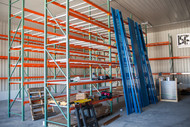
Pallet racking is a multi-level storage system that uses frames and beams to create storage for palletized items.
What are the different types of pallet racking systems?
Common types of pallet racking include:
Standard Selective Pallet Racking – best for general warehousing
Roll Form Pallet Racking – designed from cold-roll formed steel
Structural Pallet Racking – designed from hot-rolled structural steel
Drive-In Pallet Racking – high density storage system
Pushback Racking – LIFO storage with carts or carriages that move on rails
Pallet Flow Racking – FIFO storage that uses roller/wheel lanes
Double-Deep Racking – stores two pallets deep
Mobile Racking – bases on racks move on tracks with a mechanical assist or powered controls
Is pallet flow racking better for FIFO or LIFO inventory?
Pallet flow racking is best designed for FIFO inventory. Push-back racking is best used for LIFO inventory.
Which pallet racking system is best for my warehouse layout?
Each type of pallet racking specializes in different storage methods. It’s important to assess your inventory and operations, looking at how often your inventory is picked, pallet sizes and weights, aisle space for forklifts, and storage density.
For example, if have a cold storage facility, standard selective pallet racking, mobile racking, pallet flow racking, or pushback racking might be ideal over other warehouse shelving. This would be different for a facility whose main goal is to have a reconfigurable setup or a warehouse who needs high storage density.
The best way to find out which industrial storage racks will be best for your facility is giving your storage experts a call at 1-800-875-6201.
How do I choose the right pallet rack size and capacity?
You need to first take inventory of what items you need to store. Take into consideration pallet dimensions, product weight, and forklift clearance requirements. From there, you’ll want to choose a pallet rack that will best fit the capacity of inventory you need to store. We’re happy to help find the most efficient industrial pallet racks for your space. Reach out to us here!
Safety & Compliance
How do I determine the safe load capacity for pallet racking?
Consider beam design, upright strength, number of beam levels, and pallet weight distribution to determine the safe load capacity.
What safety regulations apply to pallet racking in warehouses?
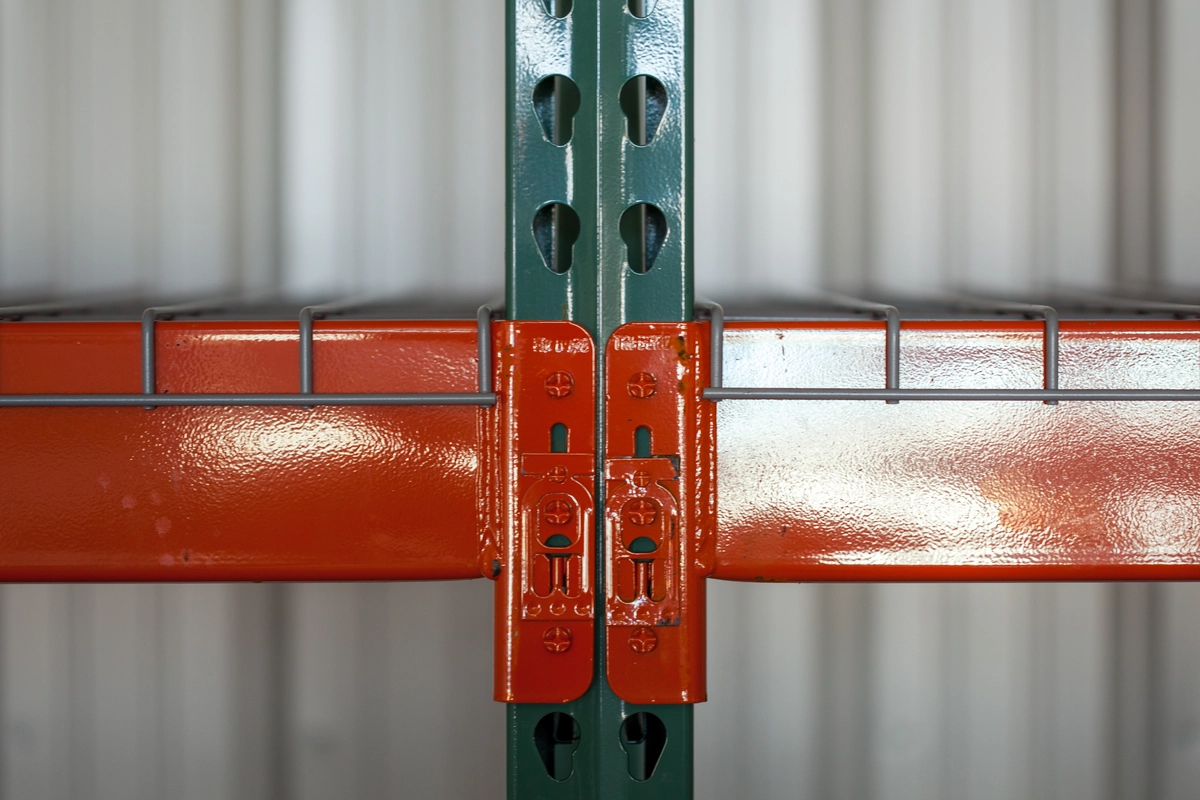
Pallet racking requires proper anchoring, load capacity signage, regular inspections, immediate repair of damage, and aisle clearance. If you’re in a seismic zone, it’s important to ensure that you have the correct industrial shelving units paired with the right pallet racking components including baseplates and anchors.
How often should pallet racking be inspected?
Industrial racks should be inspected daily by warehouse workers to look for obvious signs for damage and should have annual professional inspections to ensure the status of your pallet racking is still in good health.
What are common pallet racking hazards and how can I prevent them?
Some common pallet racking hazards include damage from forklifts, overloading beams, improper weight distribution, missing pins or anchors, twisted beams or uprights, rust and corrosion, and visible rack leaning.
Should I connect my warehouse pallet racking to my building?
No, racking is designed to be free standing, and connecting your pallet racking to your building can create safety risks and put an excess load on the racking and building.
Maintenance & Lifecyle
How long does a pallet rack last?
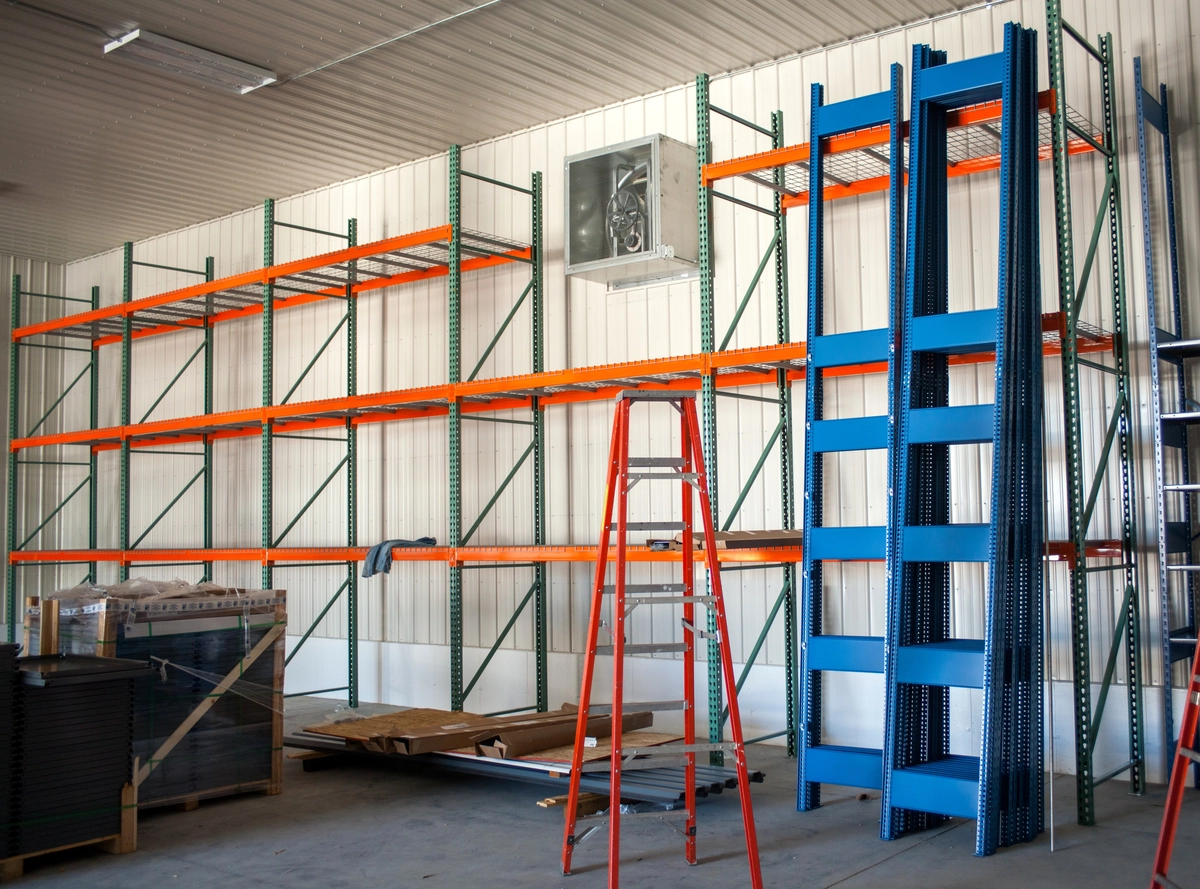
A pallet rack can last 15-20+ years with the proper maintenance and care.
What maintenance is required to keep pallet racking safe and functional?
Proper maintenance for pallet racking includes checking regularly for missing safety pins, bent or damaged parts, tightening anchors, keeping aisles clear, and watching for rust and corrosion.
When should pallet racking be repaired or replaced?
Pallet racking should be replaced when there is significant damage to the frames or if there’s damage that is affecting the structural integrity of the racking. Repairs should happen when there are missing components or small parts of the heavy-duty shelving that can be fixed.
What are the signs of pallet rack damage I should look for?
Signs of damage include rust, missing safety clips, damaged uprights, beam deflection, loose anchors, and more.
Customization and Scalability
Can pallet racking be customized for unique products or storage needs?
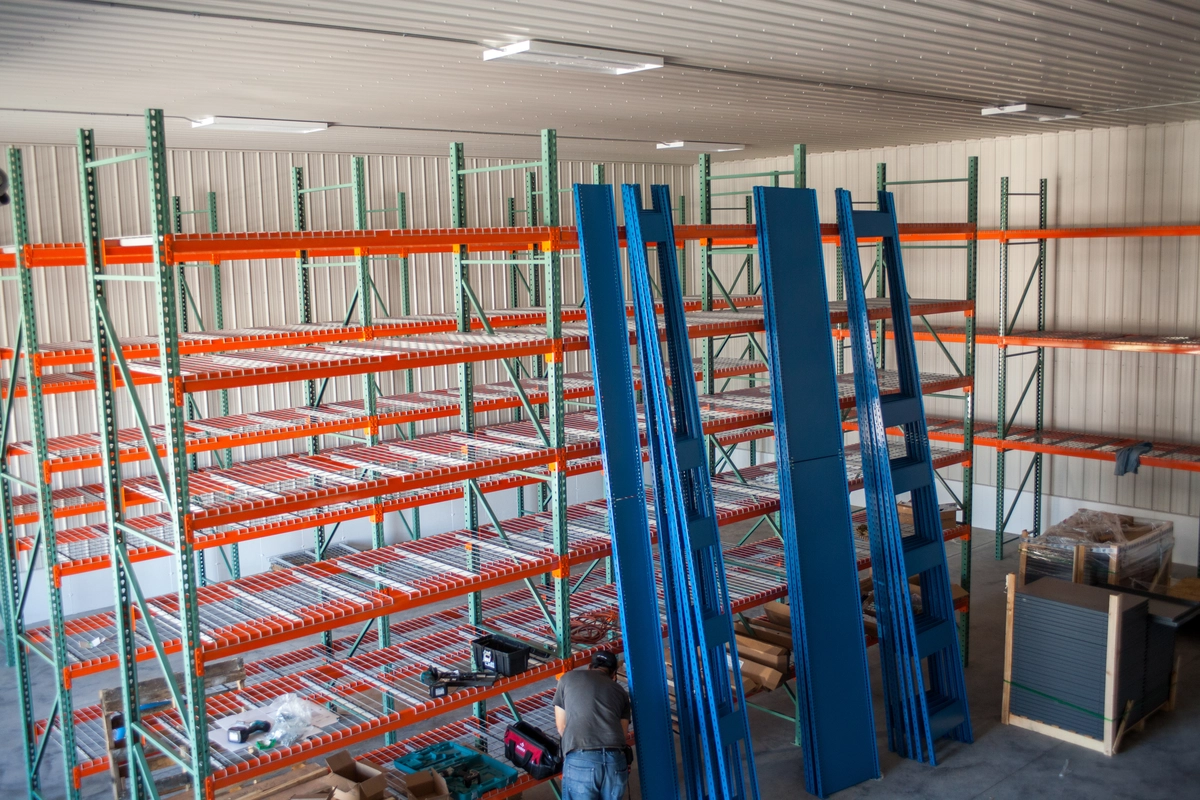
Yes, pallet racking can be customized for your facility and storage needs. The height of the pallet racks, number of bays, and decking options are all examples of pallet racking components that can be customized.
How easy is it to reconfigure or expand pallet racking in the future?
Most industrial storage racks are modular and can have beams added, uprights extended, and bays added on over time. This allows for your facilities to expand and adapt over time.
What accessories or add-ons are available for pallet racking?
Pallet racking accessories include wire decking, column protectors, guard rails, rack back, and more.
Can pallet racking integrate with automation or warehouse robots?
Yes. Pallet racking can integrate with automation such as pallet shuttles, AS/RS systems, and more.
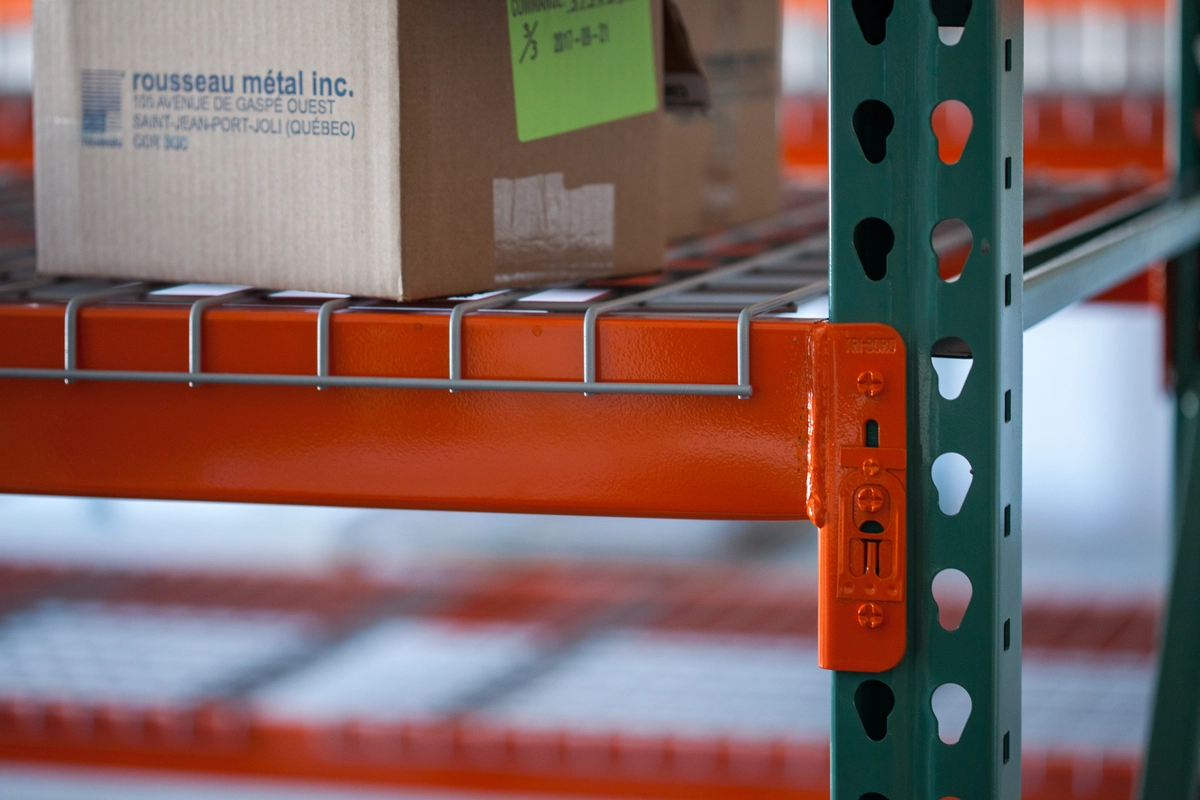
Ready to get started with pallet racking?
Our storage experts at Industrial Shelving Systems will assess your inventory before recommending the best type of pallet racking to add efficiency to your operations. Reach out to us here or give us a call at 1-800-875-6201 to get started with your new storage solution.